Awakening Cooperative Lab · ライブラリー
講演レポート:Geoff Mulgan、自己を変えることと世界を変えることについて
Geoff Mulganが内面と社会の変化を共に進める必要を説き、幸福、知恵、想像力、複数の自己を考察した講演記録。
機械翻訳・未校閲
- イベント
- 創造的チェンジメーカーの内なる変化と相互変化 (TIES 2021)
- 日時
- 2021-06-30
- 著者
- ラボによるレポート(草稿は機械生成、未校閲)
- 初出
- Recording on YouTube
- 保存日
- 2026-11-21
- イベント
- 創造的チェンジメーカーの内なる変化と相互変化 (TIES 2021)
- 日時
- 2021-06-30
- 著者
- ラボによるレポート(草稿は機械生成、未校閲)
- 初出
- Recording on YouTube
- 保存日
- 2026-11-21
Sir Geoff Mulgan(サー・ジェフ・マルガン)は2021年6月30日、2021年台湾国際教育サミット(TIES、台灣國際教育高峰會)「創造的チェンジメーカーの内なる変化と相互変化」の第4部「SOCIALpath:集合体の潮流と結びつき」に登壇した。サミットのキュレーター兼司会者である楊逸帆(アドラー・ヨウ)は、Mulganを同部における西洋的視点からの登壇者として紹介した。Mulganは、内なる変化と外的な変化を二者択一として扱うべきではないと論じた。個人と社会は両方に取り組むとともに、両者の間に緊張関係が存続することを受け入れなければならないのである。
自らを変えることと世界を変えることの緊張関係
楊はMulganを、University College Londonの集合知・公共政策・社会イノベーション教授であり、Demosの創設者であると紹介した。そして参加者に対し、多数派やポピュリズムに対する懸念が長年存在してきたにもかかわらず、Mulganがなぜ集合知に信頼を置くのか、また、一般には制度に委ねられている集合的プロセスのなかで、なぜ個人の意識が依然として重要なのかを考えるよう促した。
Mulganは、自らの職歴は、政府と行うトップダウン型の仕事と、イノベーター、コミュニティ活動家、社会起業家と行う草の根型の仕事とに二分されてきたと述べた。彼はこの経験を、17歳のときにスリランカで出会ったある仏教思想家との交流に結びつけた [unclear in recording, 2:11:00]。当時、怒りを抱く政治活動家であったMulganは、差し迫った問題に対処するには世界を変える必要があると主張した。それに対してその思想家は、人はまず自らを変えなければならない、さもなければ、その行動によって自らの内なる病理を再生産することになると論じた。
両者の意見の相違は10年間続いた。振り返ってMulganは、どちらの立場も不完全であったと述べた。一人ひとりが内なる変化と外的な変化との均衡を見定めなければならないが、両者の間の緊張関係は残り続ける。たとえば気候変動への対応を、すべての人が自己変容を遂げるまで先送りすることはできないのである。(2:05:45–2:12:04)
個人と社会のウェルビーイングの調和としての幸福
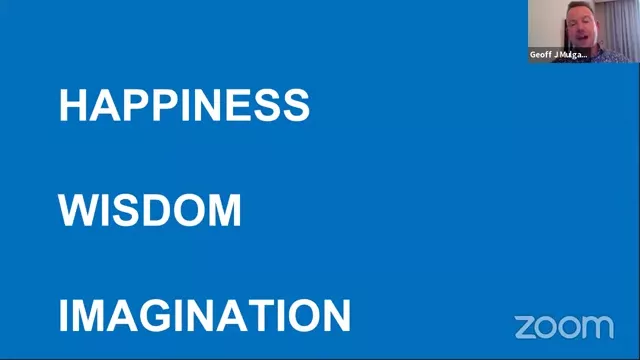
Mulganの第1の主題は、内的世界の一側面としての幸福であった。彼は、人々が自らの幸福のために取れる行動、周囲の人々を支える行動、そして政府や企業が取り得る施策を区別した。
彼は、自らも設立に携わり、Dalai Lamaを後援者とする団体Action for Happinessについて論じた。同団体の提言は、静寂のための時間を設けること、自然と関わること、他者をケアすることなど、人がよりよく生きるための実践に関する知見をまとめたものであった。同団体の講座Exploring What Matters(何が大切かを探究する)は、最近、ランダム化比較試験の対象となった。Mulganによれば、この研究では幸福と社会的つながりの双方に顕著な効果が認められた。このことは、なぜこうした実践が通常の制度により広く組み込まれていないのかという問いを提起するものであった。
同団体は、これらの方法を応用するために学校や大学と協働しており、Mulganとともに同団体を創設した人物の一人は、英国の大学全体における心のウェルビーイングを統括する準備を進めていた。Mulganは、その根底にあるアプローチを、外的な目的と内的な目的を調和させるものと説明した。すなわち、ウェルビーイングをもっぱら私的ないし利己的な追求として扱うことなく、自らをケアするということである。彼によれば、個人のウェルビーイングは他者のウェルビーイングに依存している。Action for Happinessには、100万人を大きく上回るソーシャルメディアのフォロワー、約300,000人の正式会員、そして世界各地のグループが存在していた。Mulganはまた、幸福とウェルビーイングを公共政策に組み込むため、フィンランド政府とも協働していると述べた。(2:12:04–2:15:11)
指数関数的な時代のための知恵
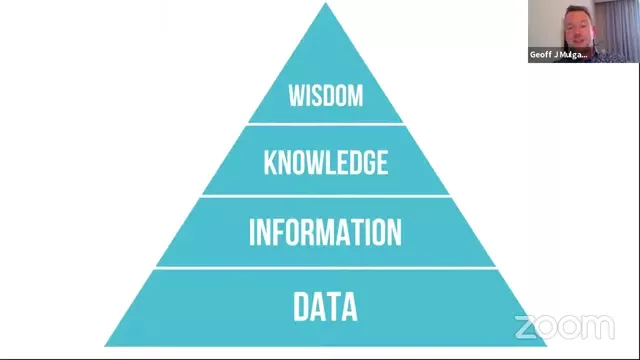
Mulganの第2の主題は知恵であった。過去200年間に、人口、GDP、資源利用、資源枯渇はいずれも指数関数的な軌道をたどってきたが、社会はこうした状況に見合う「指数関数的な知恵」を発達させてこなかったと彼は論じた。若い世代はしばしば、権力を握る人々に適切な思考様式が欠けていることを認識していた。その一方で、政治指導者やソーシャルメディアのシステムは、内省的な知恵に反する行動や嘘、誤情報を拡散し得るものであった。
かつて知恵の守護者と見なされていた大学は、いまや知恵を教えることがほとんどなく、ときにはそれについて論じることすらためらっていた。Mulganはまた、世界から切り離され、階層秩序のなかに位置づけられた高齢男性を中心とする旧来の考え方にも疑問を呈した。伝統的な知恵の文献は、抑圧的な政府、日常の人間関係、COVIDパンデミック、失業、絶滅の危機にある生物種への対応において、必ずしも人々の助けにはならないと彼は述べた。
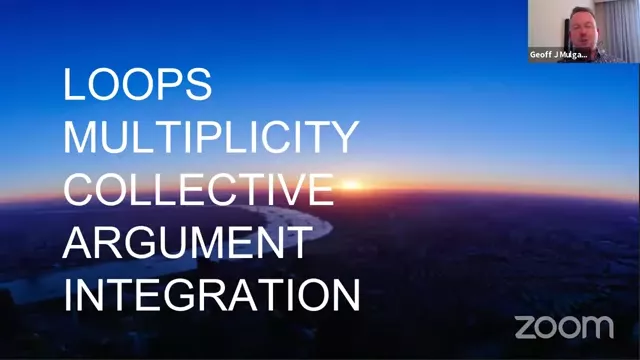
彼は、より実践的な考え方を構成する5つの要素を示した。第1は、ループを通じた学習である。何が起こるかを予測し、実際に何が起きたかを観察し、自らの信念を修正するということである。単純ではあるが、この疑念と修正の習慣は、個人、政府、制度のいずれにおいても稀であった。第2は複数性である。問題には、単一の直線的な見方ではなく、複数の視点が必要となる場合が多いからである。第3は集合知である。適切な条件のもとでは、集団は、そのなかで最も賢い個人よりもうまく問題を解決できる。ただし、「群衆が常に賢いわけではない」(2:18:21)。
第4の要素は異議申し立てであった。参加者は過度に礼儀正しく振る舞うのではなく、議論を検証し、自分が本当に考えていることを述べる意志をもたなければならない。第5は統合であり、倫理的な観点を適用しながら異なる視点を結びつけることである。Mulganは、社会的な知恵を一種の「暗黒物質」と表現した。それをより多く備えた社会は紛争や衝撃により効果的に対処する一方、それが少ない社会では、小さな問題が急速に深刻化しかねないのである。(2:15:11–2:20:28)
社会的想像力を再び目覚めさせる
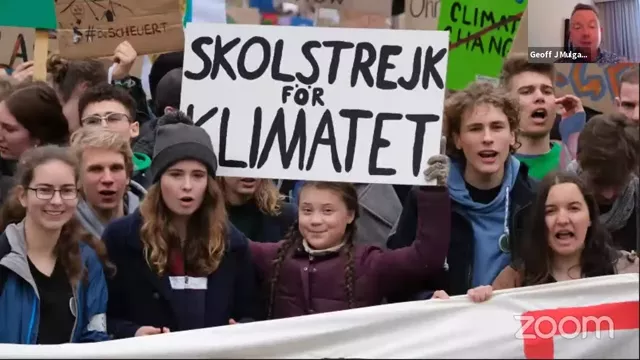
次にMulganは想像力を取り上げた。特にヨーロッパの多くの若者は、気温上昇、食料不足、難民危機、広範な破壊を伴う破局的な気候の未来を思い描くことができた。より肯定的なイメージは技術的かつ非人格的なものになりがちであった。そこには機械、遍在するデータ収集、人間の居場所がほとんど見えないシステムが描かれていた。
彼はこれらのイメージを、2019 World Happiness Report(2019年世界幸福度報告書)の知見と対比した。Mulganによれば、同報告書は、国民の幸福を最もよく予測する要因は、必要なときに頼れる友人や親族がいるかどうかであることを示していた。テクノロジーは、信頼できる関係を生み出すことなく、多数の表面的なつながりを作り出すかもしれない。一方、国際調査によれば、多くの国で親の過半数が、自分の子どもは自分たちよりも暮らし向きが悪くなると予想していた。これは、未来への信頼が広範に失われていることを示していた。
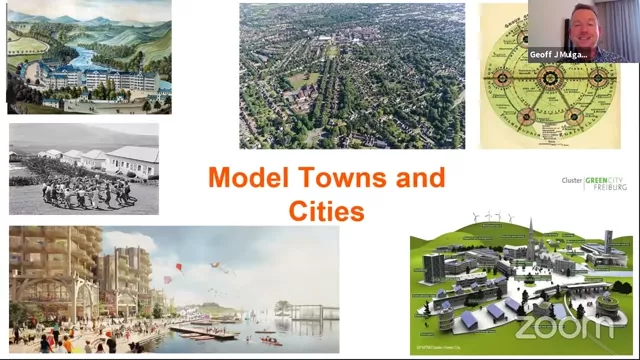
Mulganは、想像力を再構築するための手段をいくつか示した。ユートピア文学、循環型経済やユニバーサル・ベーシック・インカムのような生成力のある概念、モデル都市、スペキュラティブ・デザイン、フィクション、芸術である。彼によれば、ユニバーサル・ベーシック・インカムは、一つにはCOVIDを理由として、数十か国で試行されており、雇用を支えながら不安を軽減し得るものであった。彼はまた、緑豊かな都市や、より初期の田園都市モデルを、GoogleがTorontoにデータ駆動型のモデル地区を建設しようとして失敗した試みと対比した。
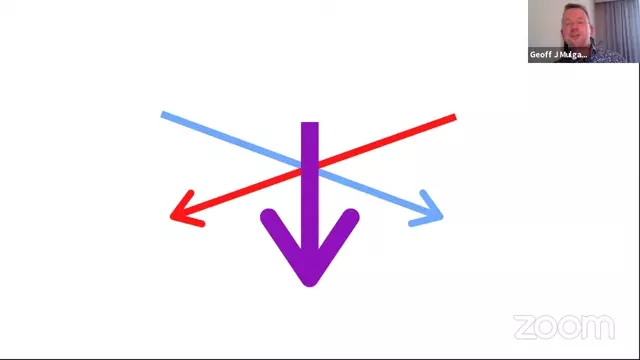
将来を展望して、Mulganは、支配的な技術動向に従うこと、それを全面的に拒絶すること、そしてそれらの動向に沿う動きと逆らう動きを統合することを区別した。環境主義は、産業とテクノロジーに対する広範な反対から、代替肉や、環境への害がより少ない繊維システムといった代替案の開発へと移行してきたと彼は述べた。彼はこれを「弁証法的想像力」と呼んだ。すなわち、支配的な潮流に沿いながら、それに抗して同時に取り組むことである。(2:20:28–2:28:51)
多数性を内包すること
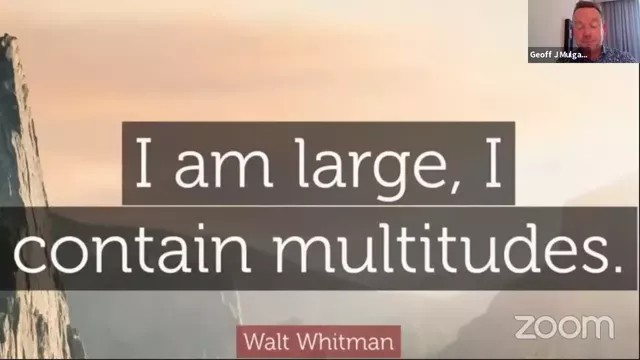

Mulganは、Walt Whitmanの「私は大きい、私は多数性を内包している」(2:29:53)という言葉を通じて、内的生活と外的生活の関係に立ち戻った。この言葉は、最近のBob Dylanの楽曲でも参照されている。彼は、一人ひとりが固定された境界をもつ、単一で完全に一貫した自己を備えているべきだという期待を退けた。
その代わりに彼が提唱したのは、自己を、協力したり、競合したり、休眠したり、異なる時に活動したりする複数の要素ないしモジュールを内包するものとして理解することであった。したがって、人は自らの内的生活と外的生活が完全に一致することを期待すべきではない。人は異なるアイデンティティや役割を併せもつことができる。個人の成長とは、自己の諸部分の間にときおり生じる矛盾に過度に悩まされることなく、それら複数の部分を維持することでもあり得るのである。(2:28:51–2:30:56)
討論
楊は、この講演が、内的世界と外的世界、自己の複数のあり方、生態学的な意識、再生型文化など、サミットの他の場でも提起された複数の主題を改めて取り上げたものであったと応じた。彼はMulganに、さらに30分間残ることができるか尋ねた。Mulganは同意したが、従来型の質疑応答を行うよりも、参加者の見解や反応を聞きたいと述べた。
予定が変更されたため、楊は、登壇者が5分間ずつ3つのブレイクアウト・グループを巡回すると説明した。また彼は、講演に先立って参加者が自らの懸念、目的、期待を共有したワークブック形式のプロセスについても説明した。これにより、共通の関心事がブレイクアウトでの対話の主題として浮かび上がるようになっていた。参加者の大半は台湾出身であり、英語で話すことにためらいがあるかもしれない一方、Sri LankaやCanadaを含む国々から参加している者もいると彼は述べた。この抜粋は、運営者がMulganと他の登壇者を最初のグループに割り当てる準備を進めるところで終わった。(2:30:56–2:35:07)
原文を読む
Sir Geoff Mulgan spoke at the 2021 Taiwan International Education Summit (TIES), “The Inner and Inter-Changes of Creative Changemakers,” during Section 4, “SOCIALpath: Tides and Ties of the Collectives,” on 30 June 2021. Introduced by summit curator and host Adler Yang as the section’s Western-perspective speaker, Mulgan argued that inner and outer change should not be treated as alternatives: individuals and societies must work on both, while accepting the continuing tension between them.
The tension between changing oneself and changing the world
Yang introduced Mulgan as Professor of Collective Intelligence, Public Policy and Social Innovation at University College London and founder of Demos. He asked participants to consider why Mulgan placed confidence in collective intelligence despite longstanding fears about majorities and populism, and why individual consciousness remained important within collective processes commonly entrusted to institutions.
Mulgan described his career as divided between top-down work with governments and ground-up work with innovators, community activists and social entrepreneurs. He connected this experience to an encounter at age 17 with a Buddhist thinker in Sri Lanka [unclear in recording, 2:11:00]. Mulgan, then an angry political activist, maintained that urgent problems required changing the world. The thinker argued that people must first change themselves, because their actions would otherwise reproduce their inner pathologies.
Their disagreement continued for ten years. Looking back, Mulgan said that both positions were incomplete. Each person must determine a balance between inner and outer change, although the two will remain in tension. Climate change, for example, cannot be postponed until everyone has reached a state of personal transformation. (2:05:45–2:12:04)
Happiness as an alignment of personal and social well-being
Mulgan’s first theme was happiness as one dimension of the inner world. He distinguished among actions people can take for their own happiness, actions that support those around them, and measures available to governments and businesses.
He discussed Action for Happiness, an organisation he helped establish, which had the Dalai Lama as its patron. Its recommendations drew together knowledge about thriving through such practices as making time for silence, engaging with nature and caring for other people. Its course, Exploring What Matters, had recently undergone a randomised controlled trial. Mulgan said the study found substantial effects on both happiness and social connectedness, raising the question of why such practices were not more widely incorporated into ordinary institutions.
The organisation was working with schools and universities to apply these methods, while one of Mulgan’s co-founders was preparing to oversee mental well-being across UK universities. Mulgan described the underlying approach as aligning outer and inner purpose: caring for oneself without treating well-being as an exclusively private or selfish pursuit. Personal well-being, he said, depends upon the well-being of others. Action for Happiness had well over one million social-media followers, nearly 300,000 formal members and groups around the world. Mulgan also noted that he was working with the Finnish government to incorporate happiness and well-being into public policy. (2:12:04–2:15:11)
Wisdom for an exponential era
Mulgan’s second theme was wisdom. Population, GDP, resource use and resource depletion had all followed exponential trajectories over the preceding 200 years, but, he argued, societies had not developed “exponential wisdom” adequate to those conditions. Younger people often recognised that those in power lacked suitable mindsets, while political leaders and social-media systems could spread behaviour, lies and misinformation opposed to reflective wisdom.
Universities, once regarded as guardians of wisdom, now rarely taught it and were sometimes reluctant even to discuss it. Mulgan also questioned older conceptions centred on elderly men detached from the world and positioned within a hierarchy. Traditional wisdom literature, he said, did not necessarily help people respond to oppressive governments, everyday relationships, the COVID pandemic, unemployment or endangered species.
He outlined five elements of a more practical conception. The first was learning through loops: anticipating what will happen, observing what actually occurs and adjusting one’s beliefs. Although simple, this habit of doubt and revision was rare among individuals, governments and institutions. The second was multiplicity, since problems often require several perspectives rather than one linear view. The third was collective intelligence: under appropriate conditions, groups can solve problems better than even their cleverest individual member, though “crowds are not always wise” (2:18:21).
A fourth element was challenge. Participants must be willing to test arguments and state what they genuinely think rather than remaining excessively polite. The fifth was integration, bringing different perspectives together while applying an ethical lens. Mulgan described social wisdom as a kind of “dark matter”: societies possessing more of it manage conflicts and shocks more effectively, while those possessing less can allow small problems to escalate rapidly. (2:15:11–2:20:28)
Reawakening social imagination
Mulgan then addressed imagination. Many younger people, particularly in Europe, could picture catastrophic climate futures involving rising temperatures, food shortages, refugee crises and widespread destruction. More positive images tended to be technological and impersonal: machines, pervasive data collection and systems with little visible place for human beings.
He contrasted those images with findings from the 2019 World Happiness Report, which he said showed that the best predictor of national happiness was whether people had friends and relatives they could rely upon in need. Technologies might produce many superficial connections without creating dependable relationships. Meanwhile, international surveys showed majorities of parents in numerous countries expecting their children to be worse off than they were, indicating a widespread loss of confidence in the future.
Mulgan outlined several means of rebuilding imagination: utopian literature, generative concepts such as the circular economy and universal basic income, model towns, speculative design, fiction and the arts. He said universal basic income was being trialled in dozens of countries, partly because of COVID, and could reduce anxiety while supporting employment. He also contrasted green cities and earlier garden-city models with Google’s failed attempt to create a data-driven model district in Toronto.
Looking ahead, Mulgan distinguished among following dominant technological trends, rejecting them entirely, and synthesising movement with and against those trends. Environmentalism, he said, had shifted from broad opposition to industry and technology toward developing alternatives such as meat substitutes and less damaging textile systems. He called this “dialectical imagination”: working simultaneously with and against prevailing currents. (2:20:28–2:28:51)
Containing multitudes
Mulgan returned to the relationship between inner and outer life through Walt Whitman’s phrase, “I am large, I contain multitudes” (2:29:53), also referenced in a recent Bob Dylan song. He rejected the expectation that each person should possess a singular, fully coherent self with fixed boundaries.
Instead, he proposed understanding the self as containing multiple elements or modules that may cooperate, compete, become dormant or engage at different times. People should therefore not expect perfect alignment between their inner and outer lives. They can hold different identities and roles, and personal growth may involve sustaining several parts of the self without becoming overly troubled by occasional contradictions among them. (2:28:51–2:30:56)
Discussion
Yang responded that the talk had revisited several themes raised elsewhere in the summit, including inner and outer worlds, multiple forms of selfhood, ecological awareness and regenerative cultures. He asked Mulgan whether he could remain for another 30 minutes. Mulgan agreed but said he preferred hearing participants’ views and responses to conducting a conventional Q&A.
Because the schedule had changed, Yang explained that speakers would rotate through three breakout groups in five-minute rounds. He also described a workbook process through which participants had shared their concerns, purposes and expectations before the talks, allowing common interests to emerge as topics for the breakout conversations. He noted that most participants were from Taiwan and might be hesitant about speaking English, while others had joined from countries including Sri Lanka and Canada. The excerpt ended as the organisers prepared to assign Mulgan and the other speakers to their first groups. (2:30:56–2:35:07)
つながり
中央がこのページです。サイトの記録に基づいて、このページとつながりのあるページや人を、それぞれ印で示しています。二つの印を結ぶ線は、それぞれの印が示すページや人の間にもつながりがあることを表します。