演講報告:楊逸帆〈如果弱勢者其實已是資源最豐富的人?〉(KASpaces 區域圓桌會議,2021)
本報告記錄楊逸帆2021年KASpaces演講,檢視資源匱乏論,並提出關懷、地方本位與適應性人才培育。
- 日期
- 2021-11
- 作者
- 智庫報告(機器草稿,未校閱)
- 原發表處
- Recording on YouTube
- 存檔日期
- 2026-11-21
- 日期
- 2021-11
- 作者
- 智庫報告(機器草稿,未校閱)
- 原發表處
- Recording on YouTube
- 存檔日期
- 2026-11-21
目錄
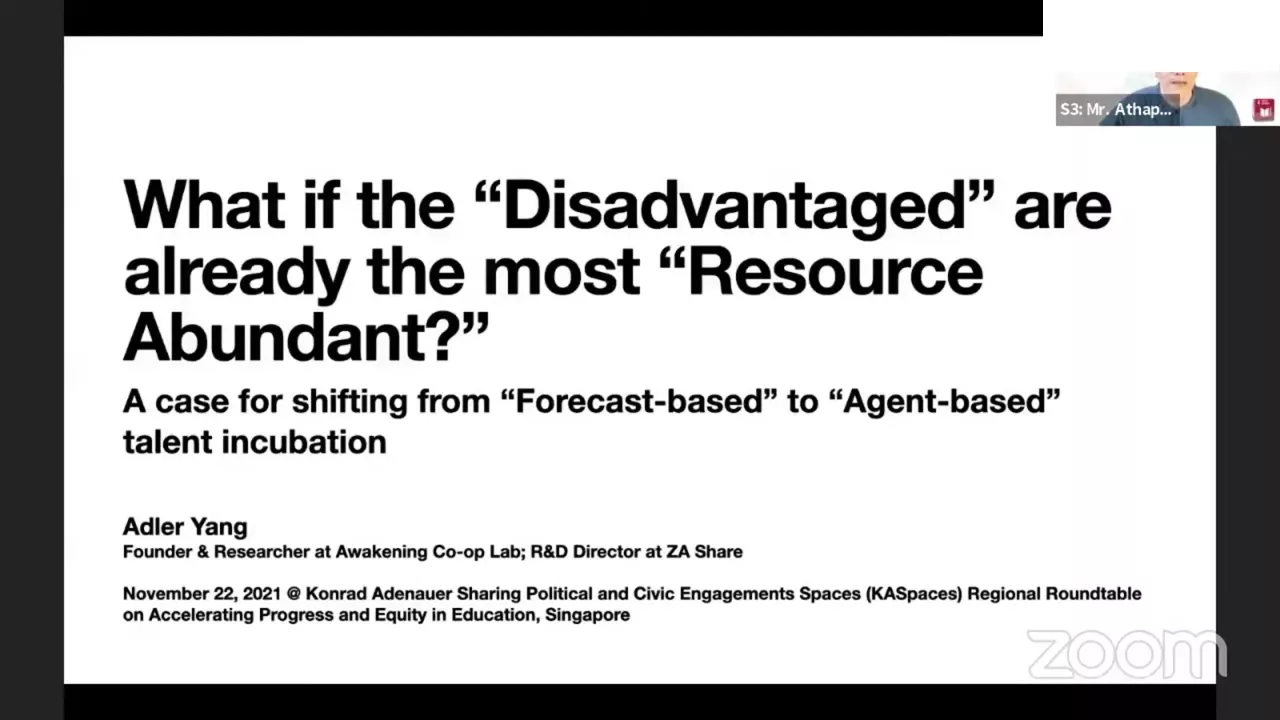
Adler Yang (楊逸帆), R&D Director at ZA Share, spoke during Session 3, “Transforming Education While Leaving No One Behind,” at the online KASpaces Regional Roundtable “Accelerating Progress & Equity in Education,” hosted by Konrad Adenauer Stiftung from 22 to 24 November 2021. Yang argued that educational disadvantage cannot always be explained by a lack of resources: Taiwan’s rural students may receive comparatively substantial resources while still experiencing achievement gaps, suggesting a need to reconsider standardized academic achievement and how education allocates human potential.
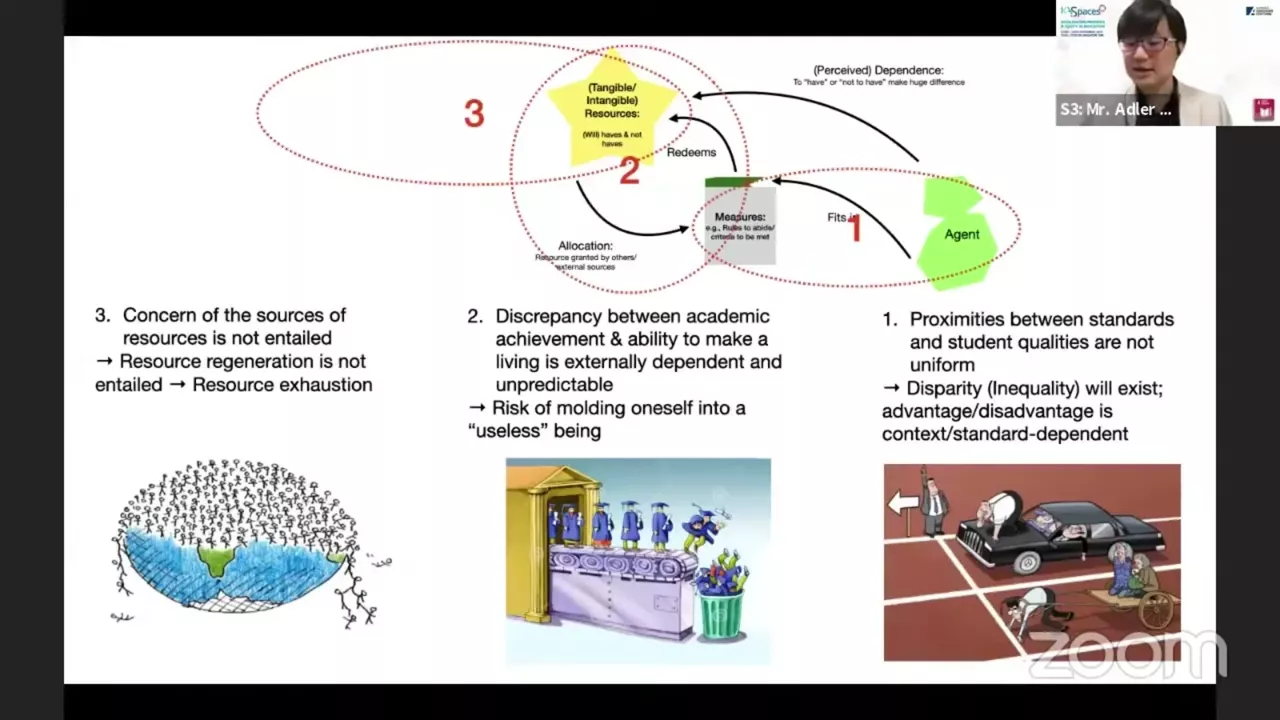
Resources, achievement, and allocation dependence
Yang introduced himself as a product of alternative schooling and homeschooling who had worked with teachers, principals, and government bodies in Taiwan and Hong Kong despite not holding a formal degree. He invited participants to question the assumption that disadvantaged people are necessarily resource-poor.
Citing research on Taiwan, Yang said that rural schools and students received more resources than counterparts elsewhere in several respects, including funding, hardware, technological facilities, and student activities. Nevertheless, a significant rural–urban achievement gap remained. Rather than continuing to search for resource shortages, he proposed examining the presumption that academic achievement should be the principal measure of educational success.
Yang connected this argument to longitudinal ethnographic research begun when he was 14. He followed a childhood friend from elementary school into his twenties. Yang described the friend as a “Da Vinci-like” student who independently learned robotics, 3D animation, and jazz improvisation, among other interests. To prepare for college entrance examinations, however, the student set those pursuits aside and concentrated on academic performance. After entering college, a family financial crisis compelled him to withdraw and find work. His earlier abilities had not been developed sufficiently to support his family, and he subsequently entered military service.
The research led to a documentary, If There Is a Reason to Study, and to Yang’s theory of “allocation dependence.” From this work, he drew three conclusions. First, whenever students are judged against a single standard, some will be advantaged because people are not identical. Second, academic achievement does not necessarily determine later well-being. Third, education systems encourage early allocation and consumption of human resources without making resource regeneration a central concern. (0:00:00–0:04:14)
Learning by caring
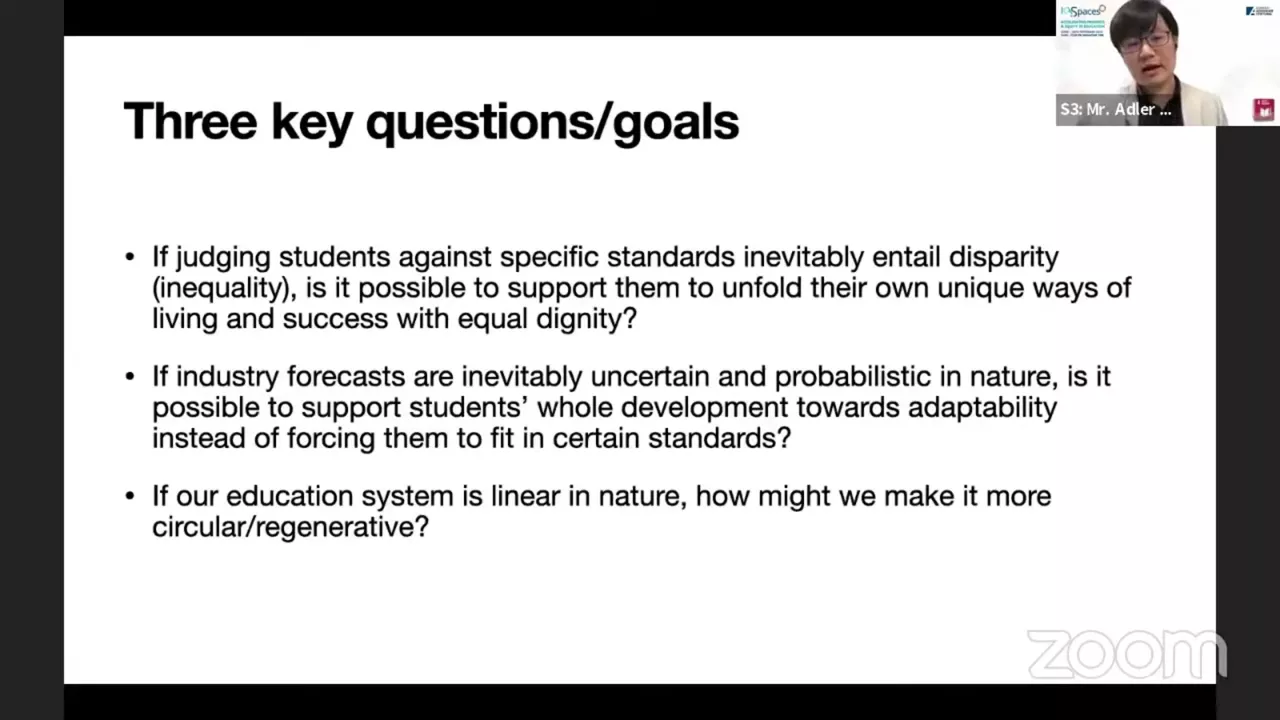
Yang organized his response around three questions: whether education could support students’ distinct forms of life and success with equal dignity; whether it could develop adaptability instead of forcing conformity to fixed standards; and whether education systems could become more circular and regenerative.
He presented “learning by caring” as an alternative to models centered on learning by thinking or learning by doing. In his account, conventional models tend to shape students into instruments fitted to an existing social system. Those able to meet standardized expectations advance, while others are excluded or treated as waste. Learning by caring instead begins with students’ present circumstances and supports them in acting on what they care about, using that process to develop their capacities.
Yang illustrated the approach through a student from a low-income, single-parent household who left high school to become her grandmother’s primary caregiver. She questioned whether attending college without knowing her purpose would waste money, but she also worried that refusing college would burden her father emotionally. Through the lab’s Open Journals programme, she interviewed industry leaders, employment-platform representatives, and people who had succeeded without college degrees. She also researched the sociology of education.
She presented the resulting magazine to her father and explained that she did not need to attend college immediately. She could first build employable skills and return to higher education if a clear need emerged. Yang said that this reduced her father’s concern and gave her greater autonomy. Without following an intensive test-preparation route, she was later invited to attend a leading university and received recognition through a presidential award. Yang added that other school dropouts involved in this approach had received international awards, and that his own educational path followed similar principles. (0:04:14–0:07:23)
Place-based learning in rural communities
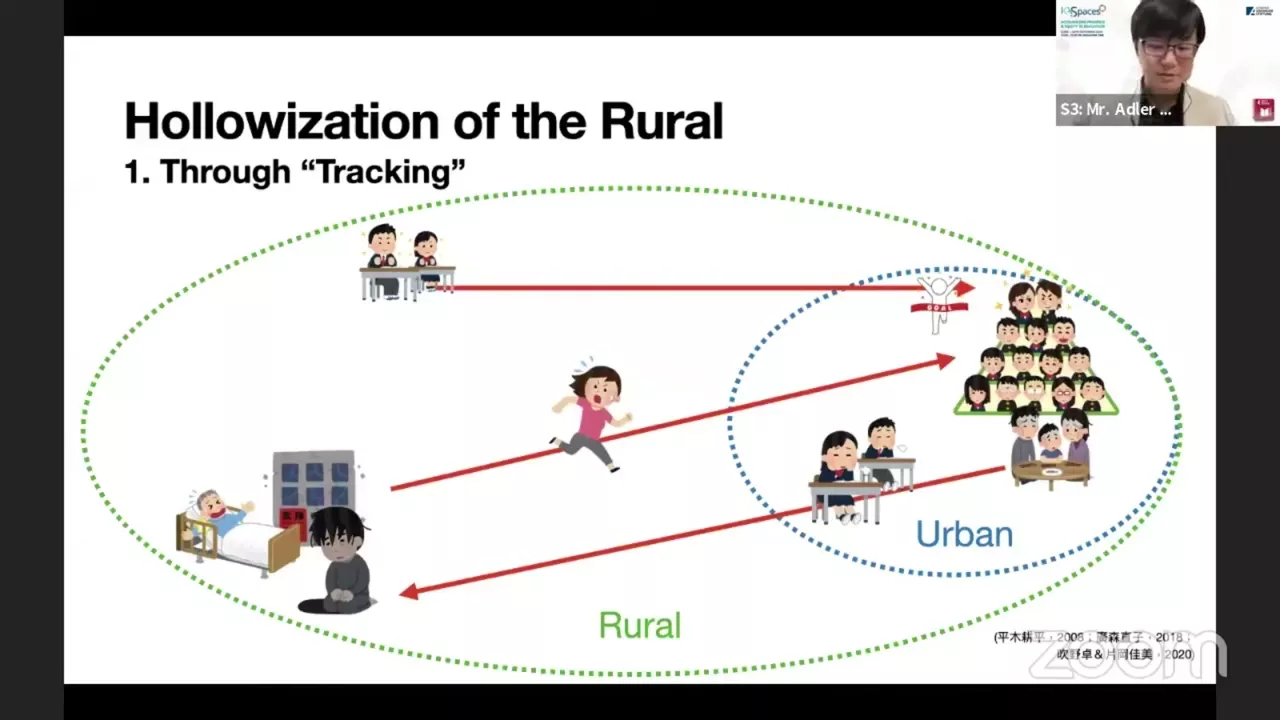
Yang said that his research contributed to his appointment as R&D Director at ZA Share, where he worked with Taiwan’s National Development Council on rural revitalization. His research identified education as one mechanism through which rural society was being “hollowed out.”
He described a cycle in which higher-achieving students moved to urban areas to attend preferred schools, while lower-performing students remained in rural areas. School learning was also largely confined to campuses, leaving students with little knowledge of their surrounding communities. When imagining their futures, they therefore saw few local possibilities beyond fields, declining fisheries, or factories no longer in use, and consequently moved toward cities.
The project responded with playful, place-based learning. Schools partnered with rural businesses, local shops, and a declining fishing port, allowing students to undertake activities outside conventional test preparation. Yang said that students developed emotional connections to their communities and began to see local history, traditional crafts, and other forms of community work as possible pursuits.
Rather than moving to cities and becoming what Yang called the “new urban poor,” some students rejoined their communities and contributed to rural revitalization. They did not necessarily enter the highest-ranked universities, but Yang said they entered universities suited to their aims, sometimes with scholarships, because they understood what they wanted to pursue. (0:07:23–0:10:33)
From forecasts to adaptive agents
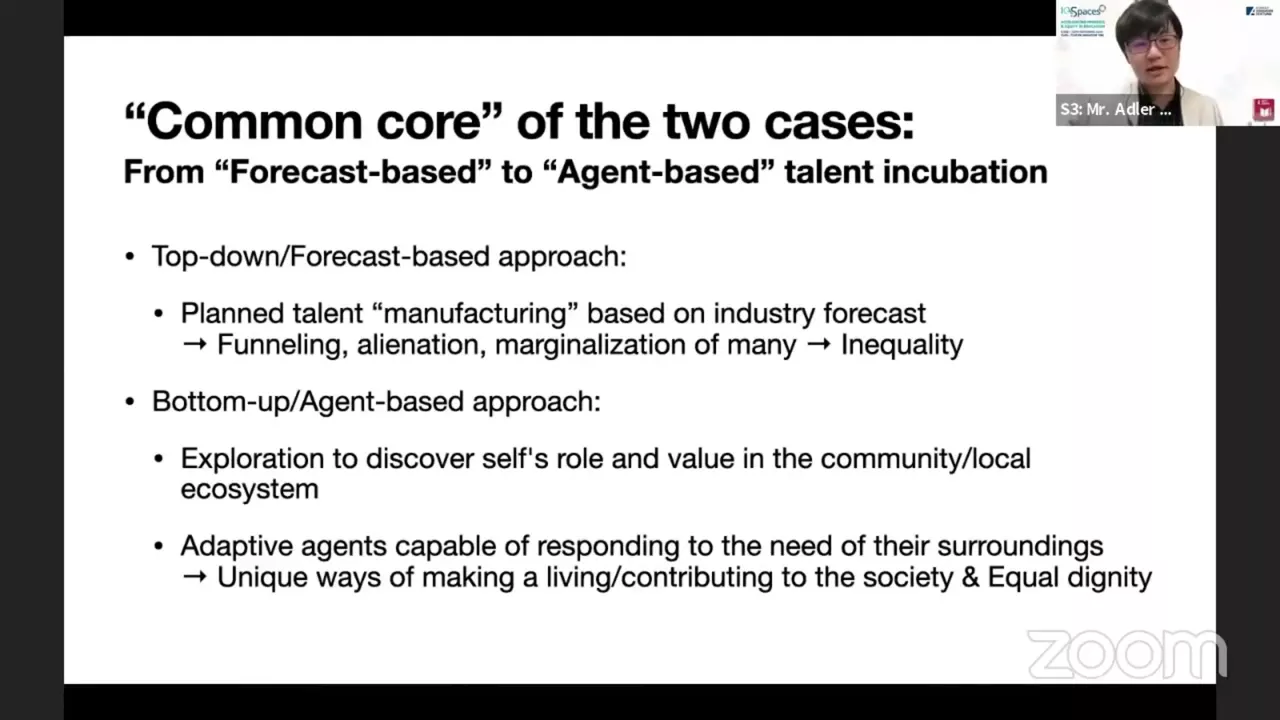
Yang concluded by describing a shift from forecast-based to agent-based talent incubation. In the conventional top-down model, education systems forecast industry demand and then funnel students toward predetermined roles. He argued that this process necessarily produces elimination, marginalization, inequality, and disparity.
His agent-based alternative drew on ideas from complex systems. Students would explore their communities, discover the value they could provide, and identify roles within a wider ecosystem. They would become adaptive agents capable of responding to their surroundings rather than standardized products designed for forecasted needs. Their ways of earning a living and contributing to society could remain diverse while retaining equal dignity. (0:10:33–0:11:36)
Discussion
The moderator asked how Yang worked with government institutions when proposing educational approaches described as progressive. Yang distinguished between the institutional settings of his two projects.
Learning by caring had largely developed through third-party nonprofit action research with school dropouts, so government cooperation was not initially necessary. The results later attracted official attention: Yang was invited to speak at the Ministry of Education and by local education boards, and to address or mentor teachers and administrators.
Playful, place-based learning also began in the nonprofit sector. It later aligned with a National Development Council agenda addressing widening rural–urban disparities through multiple areas, including business, medicine, and education. The government commissioned civic and private partners to research, devise, and implement strategies. ZA Share worked with a local partner experienced in non-traditional education in a declining fishing village. Yang contributed literature research, while the local partner supplied cases and interviews. Together they used both sources to formulate and implement the plan, with results emerging within two years.
Yang added that participating organizations competed for government commissions, making the quality of their research and strategy important. He also cited Taiwan’s latest national curriculum, which required schools to designate 20 percent of their programme as school-based curriculum. He described this as an attempt to involve students and teachers in designing study rather than following an entirely centralized curriculum. Knowledge of this policy environment, together with local schools’ and parents’ needs, allowed the project team to identify gaps that had not yet been addressed. (0:11:36–0:17:58)