Awakening Cooperative Lab · ライブラリー
講演レポート:ユ・ジョン(柳靜)「頑健な構成員とともにレジリエントな学習共同体をつくる」
Jeong Ryuが、多様な人々の知識循環と社会問題の言語化を通じて大学を捉え直す協同教育を語った講演記録。
機械翻訳・未校閲
- イベント
- 教育における反脆弱性のパラダイムへ:焦点をEE(有効性と効率性)からRR(レジリエンスと頑健性)へ移す (TIES 2020)
- 日時
- 2020-11-22
- 著者
- ラボによるレポート(草稿は機械生成、未校閲)
- 初出
- Recording on YouTube
- 保存日
- 2026-11-22
- イベント
- 教育における反脆弱性のパラダイムへ:焦点をEE(有効性と効率性)からRR(レジリエンスと頑健性)へ移す (TIES 2020)
- 日時
- 2020-11-22
- 著者
- ラボによるレポート(草稿は機械生成、未校閲)
- 初出
- Recording on YouTube
- 保存日
- 2026-11-22
ユ・ジョン(柳靜)は、知識循環協同組合大学(KCCU)の教授として、2020年11月22日にオンラインで開催された2020年台湾国際教育サミット(TIES、台灣國際教育高峰會)のセッション2「レジリエントで堅牢な社会を育む土壌としての大学」で講演した。サミットのキュレーターであり同セッションの司会者でもある楊逸帆(アドラー・ヨウ)の紹介を受け、ユは、異なる形の専門知をもつ人々が、ともに研究し、教え、学び、社会問題を言語化できるようにすることで、大学は競争的な教育から協同的な知識生産へと移行できると論じた。
学びと研究のコミュニティ
ユは、自身を、心理的トラウマ、人間の認知、そして価値と人間の発達との関係に関心をもつ認知科学者・認知心理学者として紹介した。また、手工芸への関心についても語り、自作した衣服と鞄を披露した。
彼女は、自身の活動をいくつかのコミュニティのなかに位置づけた。その一つは、韓国の大学の未来と、高等教育をよりよい形でつくり直す可能性を憂慮する教授たちのコミュニティであった。もう一つは、大学院で訓練を受けていない人々を含む、独立研究者を支援するコミュニティであった。その前提にあったのは、好奇心と研究を遂行する能力は、正式な資格をもつ研究者だけに限定されるものではないという考えである。
続いてユは、[録音不明瞭、0:46:23]以来継続してきた、誰にでも開かれた認知科学の研究会について説明した。認知科学に関心をもつ参加者は誰でも加わり、教え、互いに学ぶことができた。この研究会には、心理学、政治学、神経科学をはじめとする諸分野の人々が集まった。その学際的な性格は、人間の生と心を複数の観点から検討できるようにすることを意図したものであった。
ユは、互いに重なり合う円の図を用い、それぞれの学問分野や個人は、限られた視点を通して世界を見ていると説明した。それらの視点のあいだにある領域は誤解を生むこともあるが、参加者は自らの概念や方法を互いに説明することもできる。約10年にわたり、このコミュニティは、身体化された心、テクノロジー、仮想現実などを毎年のテーマとして取り上げた。ユの推計では、研究会やオンラインでの交流を通じて3,000人以上が参加した。教授と学生、若者と高齢者といった区別を越えて、誰でも参加できた。(0:37:43–0:54:33)
競争的教育から協同的知識へ
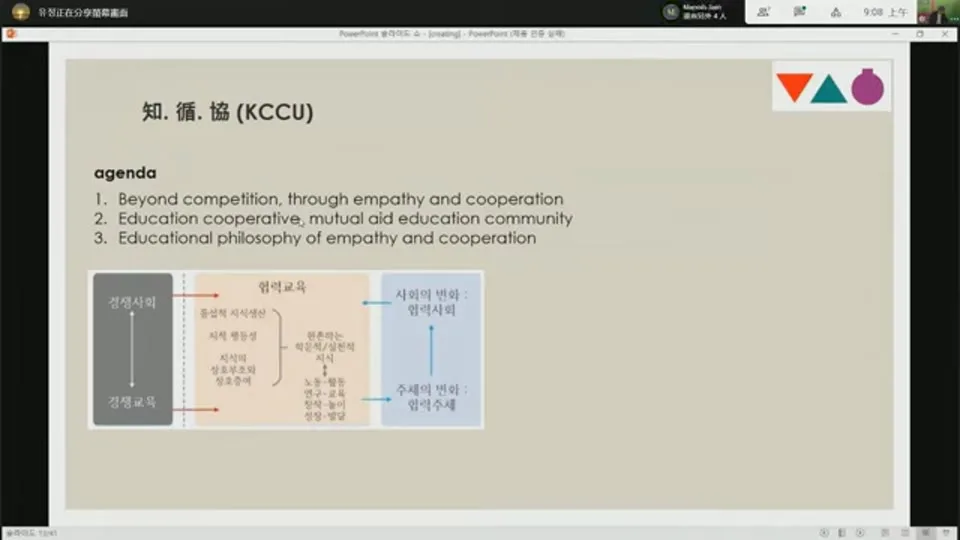
KCCUの話題に移ると、ユは、知識とは固定されたままであったり、商品として扱われたりするものではなく、人々のあいだを移動すべきものであると述べた。そのため、メンバーは協同的なコミュニティを形成し、カリキュラムを開発し、教師と学生の双方の役割を担った。教えることと学ぶことは、参加者が成長するための、対等で相互的な過程として扱われた。
ユの確認を得ながら、楊は彼女の図の一つを、競争社会と競争的教育から協同的教育への移行を示すものと解釈した。この代替的な教育を構成する原則は、学際的な知識生産、知識の平等、知識における相互扶助の三つであった。目指された方向は、協同的な教育実践から平和的な協同組織へ、そしてそれらを通じて平和的な協同社会へと至るものであった。
ユは、KCCUのカリキュラム、規則、コミュニケーション・システムが、そのメンバーによってつくられていることを強調した。また、大学はその目的を協同組合の外にも伝える必要があった。人々がその理念を理解せず、参加したいとも思わなければ、理念がいかに強固であっても、それだけでKCCUを持続させることはできないのである。(0:55:46–1:02:18)
大学に通わない若者と知識の循環
ユによれば、KCCUへの参加者の50パーセント以上は、通常の大学に通っていない若者であり、そのなかには大学に一時期だけ通った者も含まれていた。彼らは研究し、学び、知識の創造に参加することを望んでいたが、韓国の通常の教育制度のなかに適切な場を見いだせなかった。
こうした学生たちは、自らのアイデンティティを説明するという問題にも直面していた。教授や教師など、社会的に認知された役割によって自分を説明できる人々とは異なり、彼らは、なぜ通常の大学に進学しなかったのか、なぜ学び続けているのか、そしてなぜよりよい人間になりたいのかを、家族や周囲の人々に繰り返し説明しなければならなかった。ユによれば、多くの者は当初、混乱を感じていたが、KCCUへの参加を通じて誇りを育み、さまざまな形の社会的行動に取り組むようになった。彼らの活動には、映画や演劇の制作、学術誌への執筆などが含まれていた。
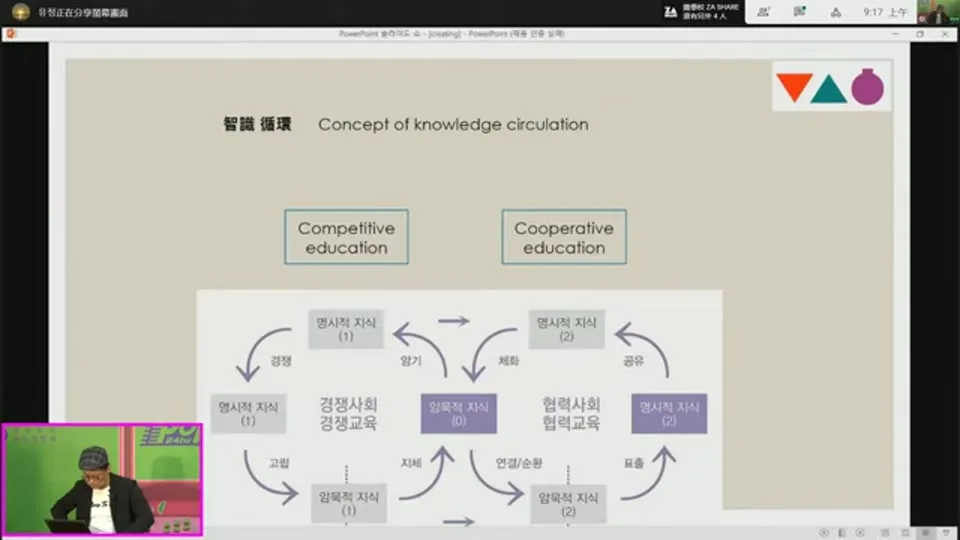
二つ目の図は、知識をめぐる二つの循環を対比していた。競争的教育は、詰め込み、すなわち「スプーンで食べさせる」ような教育から始まり、競争と孤立へと至る。協同的な循環は探究から始まり、それに説明と共有が続く。循環を繰り返すことによって、暗黙知は次第に明示化され、身体化されていく。ユはこの過程を、教育が競争から協同へと方向を転換するための手段として提示した。(1:02:18–1:09:58)
カリキュラム、出版、そして大学の意味
KCCUは、ユのスライドで異なる色によって表された三つの原則を軸にカリキュラムを構成していたが、彼女の説明の一部は[録音不明瞭、1:09:58]であった。学生は各学期に、自らが発展させた概念と知識を発表した。発表は従来の学術的な形式をとることもあれば、パフォーマンスを含むこともあった。
卒業にあたり、学生は、企画論文またはそれに関連する著作物として説明される、まとまった規模のプロジェクトを完成させた。その後、自らの研究を韓国の学術誌に投稿した者もいた。ユによれば、その主題は、障害や若者の経験など、韓国社会の問題から生じていた。これらの問題は人々に直接影響を及ぼしているにもかかわらず、当事者にとって説明したり公に主張したりすることがしばしば困難なものであった。KCCUの学生は、論考や発表を通じて、こうした経験を言語化することを学んだ。卒業生たちは独自の学術誌と同窓組織も運営していた。
ユは最後に、少人数グループによる研究過程へと話を戻した。参加者は問いを立て、研究上の概念を発展させ、論文を執筆した。この活動は、「学ぶとは何か。教えるとは何か。また、大学とは何か」(1:16:55)という根本的な問いを改めて開くものであった。大学は、メンバー、カリキュラム、ハードウェア、ソフトウェアを備えているが、これらのうち何が最も重要なのかと彼女は問いかけた。彼女の答えは、カリキュラムだけを大学を定義する要素とみなすのではなく、先輩と後輩のメンバーが互いに共感することを重視するものであった。(1:09:58–1:18:01)
討論
楊は、ユの説明を、二つの問題への応答として要約した。一つは、多くの学生を排除し、または不利な立場に置く、競争性の高い大学制度であり、もう一つは、研究者同士の孤立である。彼は認知科学の研究会を、参加者がそれぞれの部分的または歪んだ視点を比較し、相互作用を通じてより成熟した知識を発展させる協働的活動の一例として強調した。
また楊は、学際性、知識の平等、相互扶助を通じて、KCCUが競争的教育から協同へと移行していることを改めて述べた。彼の説明では、学生は各学期の発表から卒業プロジェクト、さらに学術誌の論文へと進み、学術的な厳密さを保ちながら、韓国の社会問題を自らの言葉で記述できるようになっていた。
ユは楊の要約を確認した。続いて楊は、以前KCCUを訪問した際、大規模な学際的問題としての人新世をめぐる議論に接したことに言及した。彼はこれを、学問分野ごとに分割された従来の入門科目と対比し、KCCUでは学生と教授が知識の生産において協働できると述べた。(1:19:13–1:24:35)
原文を読む
Jeong Ryu, Professor at Knowledge Circulation Cooperative University (KCCU), spoke in Session 2, “Universities as the soil for Resilient and Robust Societies,” at the online 2020 Taiwan International Education Summit on 22 November 2020. Introduced by summit curator and session host Adler Yang, Ryu argued that universities can move from competitive education toward cooperative knowledge production by enabling people with different forms of expertise to research, teach, learn, and articulate social problems together.
Communities of Learning and Research
Ryu introduced herself as a cognitive scientist and cognitive psychologist interested in psychological trauma, human cognition, and the relationship between values and human development. She also described her interest in handicrafts, showing clothing and a bag she had made.
She situated her work within several communities. One was a community of professors concerned about the future of Korean universities and the possibility of recreating higher education in a better form. Another supported independent researchers, including people without graduate-school training. Its premise was that curiosity and the capacity to conduct research are not confined to formally credentialed academics.
Ryu then described an open cognitive science meeting that had continued since [unclear in recording, 0:46:23]. Participants with an interest in cognitive science could join, teach, and learn from one another. The meeting brought together people from fields including psychology, politics, and neuroscience. Its interdisciplinary character was intended to help participants examine human life and the mind from multiple perspectives.
Using an image of overlapping circles, Ryu explained that each discipline or individual sees the world through a limited viewpoint. The areas between those viewpoints could produce misunderstanding, but participants could also explain their concepts and methods to one another. Over approximately ten years, the community addressed annual themes including embodied mind, technology, and virtual reality. Ryu estimated that more than 3,000 people had participated through meetings and online communication. Membership was open across distinctions such as professor and student, young and old. (0:37:43–0:54:33)
From Competitive Education to Cooperative Knowledge
Turning to KCCU, Ryu described knowledge as something that should move among people rather than remain fixed or treated as a commodity. Members therefore formed a cooperative community, developed a curriculum, and took the roles of both teachers and students. Teaching and learning were treated as equal and reciprocal processes through which participants could grow.
With Ryu’s confirmation, Yang interpreted one of her diagrams as a movement from a competitive society and competitive education toward cooperative education. Three principles organized this alternative: interdisciplinary knowledge production, equality of knowledge, and mutual aid in knowledge. The intended direction was from cooperative educational practices to peaceful cooperative organizations and, through them, a peaceful cooperative society.
Ryu emphasized that KCCU’s curriculum, rules, and communication systems were made by its members. The university also had to communicate its purpose beyond the cooperative: a strong concept alone would not sustain KCCU if people did not understand it or wish to participate. (0:55:46–1:02:18)
Non-College Youth and the Circulation of Knowledge
More than 50 percent of KCCU’s entrants, Ryu said, were young people who did not attend conventional universities, including some who had attended college only part-time. They wanted to research, learn, and participate in knowledge creation but could not find an adequate place within Korea’s normal educational system.
These students also faced the problem of explaining their identities. Unlike people who could describe themselves through recognized roles such as professor or teacher, they repeatedly had to tell families and others why they had not entered a conventional university, why they continued to study, and why they wanted to become better human beings. Ryu said that many initially felt confused, but participation in KCCU helped them develop pride and undertake forms of social action. Their activities included making films and plays and writing for journals.
A second diagram contrasted two cycles of knowledge. Competitive education began with cramming or “spoon-feeding” and led toward competition and isolation. The cooperative cycle began with exploring, followed by explaining and sharing. Through repeated circulation, implicit knowledge became increasingly explicit and embodied. Ryu presented this process as the means by which education could change direction from competition to cooperation. (1:02:18–1:09:58)
Curriculum, Publication, and the Meaning of a University
KCCU organized its curriculum around three principles represented in Ryu’s slides by different colors, although part of her explanation was [unclear in recording, 1:09:58]. Each semester, students presented the concepts and knowledge they had developed. Presentations could take conventional academic forms or include performances.
For graduation, students completed a substantial project, described as a planning paper or related written work. Some later submitted their research to Korean journals. Ryu said their subjects arose from problems in Korean society, including disability and the experiences of young adults, which affected people directly but were often difficult for them to explain or assert publicly. Through essays and presentations, KCCU students learned to articulate these experiences. Graduates also maintained their own journal and an alumni organization.
Ryu concluded by returning to the small-group research process: participants formed questions, developed research concepts, and produced articles. This work reopened basic questions—“What is learning? What is teaching? Also, what is the university?” (1:16:55). Although a university contains members, curricula, hardware, and software, she asked which of these mattered most. Her answer emphasized senior and junior members empathizing with one another rather than treating curriculum alone as the institution’s defining element. (1:09:58–1:18:01)
Discussion
Yang summarized Ryu’s account as a response to two problems: a highly competitive university system that excludes or disadvantages many students, and the isolation of researchers from one another. He highlighted the cognitive science meetings as an example of collaborative work in which participants compare partial or distorted viewpoints and develop more mature knowledge through interaction.
He also restated KCCU’s movement from competitive education toward cooperation through interdisciplinarity, equality of knowledge, and mutual aid. In his account, students progressed from semester presentations to graduation projects and journal articles, enabling them to describe Korean social problems in their own words while retaining academic rigor.
Ryu confirmed Yang’s summary. Yang then referred to his earlier visit to KCCU, where he had encountered discussion of the Anthropocene as a large interdisciplinary problem. He contrasted this with conventional introductory courses divided by discipline and said that KCCU allowed students and professors to collaborate in the production of knowledge. (1:19:13–1:24:35)
つながり
中央がこのページです。サイトの記録に基づいて、このページとつながりのあるページや人を、それぞれ印で示しています。二つの印を結ぶ線は、それぞれの印が示すページや人の間にもつながりがあることを表します。