Awakening Cooperative Lab · ライブラリー
講演レポート:Christopher Day「複雑性、内的状態、協働について」
複雑な変革には自己認識、協働関係、分散型意思決定、現場の試行を支える環境が必要だと説くChristopher Dayの講演記録。
機械翻訳・未校閲
- イベント
- 創造的チェンジメーカーの内なる変化と相互変化 (TIES 2021)
- 日時
- 2021-06-29
- 著者
- ラボによるレポート(草稿は機械生成、未校閲)
- 初出
- Recording on YouTube
- 保存日
- 2026-11-22
- イベント
- 創造的チェンジメーカーの内なる変化と相互変化 (TIES 2021)
- 日時
- 2021-06-29
- 著者
- ラボによるレポート(草稿は機械生成、未校閲)
- 初出
- Recording on YouTube
- 保存日
- 2026-11-22
楊逸帆(アドラー・ヨウ)は、2021年6月29日にオンラインで開催された台湾国際教育サミット(TIES、台灣國際教育高峰會)2021において、第2セクション「SELFation:自己へのコンパッションを伴うアガペー」の「西洋の視点」と題する講演で、国際的な変革マネジメント・コンサルタント、教育者、インテグラル発達コーチであるChristopher Dayを紹介した。Dayの中心的な主張は、リーダーは線形的な計画だけによって複雑な変革を制御することはできず、自らの内的条件に注意を向け、協働的な関係を築き、フィードバック、分散型意思決定、地域に根ざしたイノベーションが生まれうる環境をつくらなければならない、というものであった。
計画と測定可能な制御の限界
台湾の進歩的教育戦略に携わる参加者に向けて、Dayは、参加者たちの決定が、その意図とは異なる結果、さらには意図に反する結果をもたらす可能性から話を始めた。行為は、どの個人リーダーにも完全には制御できない影響のネットワークへと入っていく。モニタリング・システム、成功基準、計画は、政治的・経済的・社会的リスクの軽減に役立ちうるものの、抽象的な計画、定量モデル、報告書に依存すれば、リーダーが現場の状況から遠ざかりかねないと彼は警告した。
Dayは、成果と、リーダーがより直接的に引き受けることのできる変革の諸側面とを区別した。結果は、リーダーの影響力の及ばない数多くの実現要因に左右される一方、意図、価値観、原則、コミットメント、態度は、彼が変革を率いるリーダーの内的条件と呼ぶものに属する。彼は、こうした条件をより明確に理解するに至った事例として、アフガニスタンの市民社会組織との仕事を紹介した。(1:53:02–1:57:19)
アフガニスタンにおける組織変革
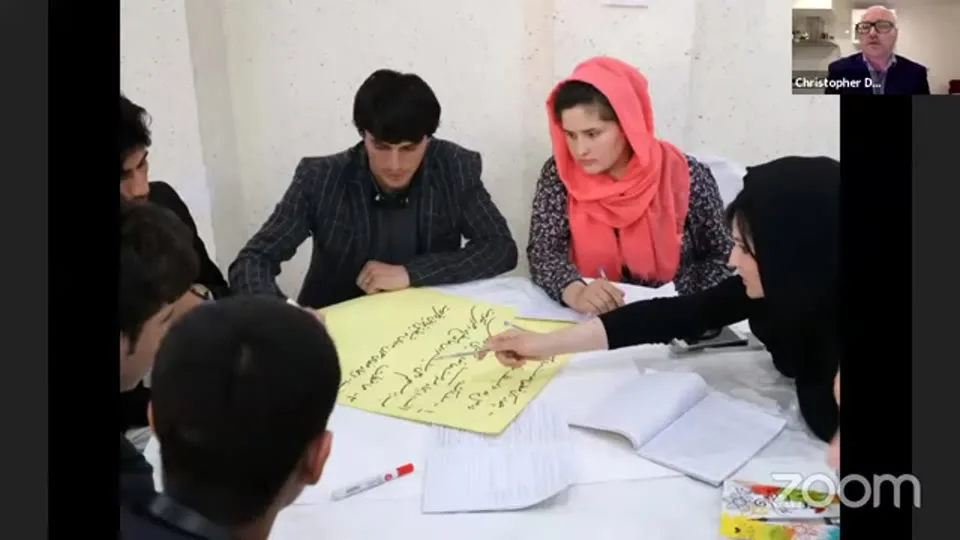
Dayは、彼の協働相手であるアフガニスタン市民社会ネットワーク組織について説明し、これをACFOと略称した。カブールに本部を置き、4つの州に事務所を構える同組織には、400を超える協力組織、40名の常勤職員がおり、年間予算は約500万米ドルであった。急速な成長、一貫性を欠くマネジメント、政治的・社会的・経済的変化への対応の遅れによって、同組織は明確な方向性を失っていた。主要な国際援助機関は、大幅な変革が行われなければ資金提供を停止すると警告した。
Dayと同僚たちは、ステークホルダーへのインタビューを行い、組織構造、プロセス、能力、資源を評価し、過去の取り組みを検討し、ワークショップを開催して、職員の関与を促した。彼の目的は、外部から変革を指示するのではなく、内部から当事者意識を育むことであった。1年間にわたる反復、成功、苦闘を経て、同組織は資金提供を確保した。しかし、このプロセスによって、線形的な計画や従来型のプロジェクト・マネジメントでは対処できない心理的・感情的反応が明らかになった。
彼が観察したのは、安心を求める要求と、不安を生じさせたり制御を弱めたりしかねないものへの抵抗とが同時に存在する状況であった。40年にわたる戦争と暴力が深い影響を残していた一方、男性が圧倒的多数を占める組織文化のなかでは、弱く見られることなく感情、願望、疑念、恐怖を表現する方法が限られていた。国際援助機関への長期的な依存もまた、絶望感、疲弊、悲観主義、受動的な宿命論を助長していた。職員たちはしばしば組織に対する責任から退き、自分自身と家族の生存に専念していた。
Dayはさらに、同僚たちが内心では反対している場合でさえ権威に従う傾向があることを見いだした。その一因は、権威に公然と異議を唱えることが深刻な結果を招いてきた点にあった。雇用は、個人の成長や自己表現の場ではなく、主として家族の収入源として扱われることが多く、それが職員の高い離職率につながっていた。率直な省察は、とりわけ、かつて敵対関係にあった民族集団の出身者を含むチームにおいて、トラウマ、悲嘆、喪失を再び呼び起こす可能性があった。
したがって彼は、こうした反応は単なる悪意や無能さの証拠ではないと結論づけた。前進するためには、変革の支持者と反対者の双方に相当な時間を費やし、不満を表明するための場を設けることを含め、こうした条件それ自体に働きかける必要があった。実践上の成功基準は、完全な組織変革ではなく、「十分に良い」合意に到達して援助機関を納得させるだけの協働的な信頼を築くこととなった。(1:57:19–2:06:45)
煩雑なシステムと複雑系
Dayの第一の提言は、教育改革を真に複雑なものとして認識することであった。彼は、前者を飛行機になぞらえることで、煩雑なシステムと複雑系とを区別した。飛行機は相互に接続された多数の部品から成るが、各部品の役割は固定されている。ある部品が故障すれば、その箇所を特定し、修理または交換し、試験することができる。
複雑系は開放系であり、その構成要素間の関係は変化する。構成要素は、その能力と文脈についての理解に応じて、自己組織化し、意思決定を行い、互いに応答することができる。それらの相互作用は、フィードバック・ループと、予測不可能なシステム全体の挙動を生み出す。政策立案者、教師、保護者、地域社会は、それぞれ異なる視点をもち、独自の課題を設定し、異なる階層と時点で意思決定を行うため、教育の変革はこの説明に当てはまる。
Dayは、リーダーが複雑性を認めながらも、あたかもそのシステムが単に煩雑であるにすぎないかのように行動し続けることがあると論じた。その場合、リーダーは、単一の解決策を見いだして制御を取り戻すことを期待し、コンサルタント、データ分析、ダッシュボード、報告書に投資する。こうした手段には限定的な用途がありうるものの、複雑性を制御可能なものに変えることはできない。制御を押しつけようとする試みは、意図せざる結果を生むこともある。たとえば、地域の担い手が、関連する条件にほとんど影響力をもたないにもかかわらず、硬直的な業績評価の枠組みのもとで成果を上げるよう求められる場合がそうである。(2:06:45–2:13:07)
分散型リーダーシップと相互理解
Dayは聴衆に対し、彼の提案を歓迎するのか、拒絶するのか、あるいは評価を下すのかという、自らの直接的な内的反応を観察するよう促した。こうした反応は、不確実性と複雑性がもたらす帰結に対して、その人のマインドセットがどのように反応するかを明らかにしうると彼は述べた。
彼は、個々の学校や保護者の集まりを含む、より小さな規模での取り組みに応答する分散型のリーダーシップとマネジメントを提案した。開かれたコミュニケーション、共有された価値観と原則、分散型意思決定によって、異論をイノベーションや政策形成のプロセスに取り入れることが可能になる。これは、人々が指示に従うだけの受け手から、能動的な創り手へと移行する助けとなりうる。
Dayにとって、相互理解は合意を必要とするものではなかった。それは、ステークホルダーが互いの立場を十分によく理解し、ある問題に対する異なる解釈について知的な対話を行い、その問題への対処に集合知を発揮できることを意味した。したがって、複雑な変革は、根本的には関係を結ぶ社会的プロセスであった。少数の有能な人々も、大規模なデータセット、上位レベルの計画、新たなプロジェクト・マネジメント・ツールも、そのプロセスに取って代わることはできなかった。(2:13:07–2:17:21)
断片化、非難、実現を支える条件

Dayは、断片化を、必ずしも無能さや失敗の結果としてではなく、「複雑性の物理学」の一部として説明した。変革を率いるリーダーは、それに対して、狼狽、否認、硬直した決意、諦念、撤退などによって応じることがある。その源泉を理解すれば、コンパッション、相互理解、異なる形態の協働が生まれる余地をつくり出せると、彼は論じた。
非難は、断片化のなかでもとりわけ重大な帰結をもたらす表現であった。ストレスにさらされた人々は、相反する指示について上級管理職を、採用について人事部門を、予算の制約について会計担当者を、苦情について保護者を、期待される「明日のリーダー」にならないことについて子どもたちを非難する。組織はこの緊張に対し、緊急会議、コンサルタントの解任、組織図の組み替えによって応じることがあるが、いずれもその根本的な源泉には対処しない。
Dayの最後の提言は、リーダーが、関係、フィードバック、貢献、地域に根ざしたイノベーションを育みながら、複雑性がもたらす無秩序を受け入れる能力を培うことであった。実現を支える環境は、自己組織化、探究、肯定的・否定的双方のフィードバックに対する受容性を支えるべきである。また、不安が視野狭窄、嫉妬、破壊性、既存の実践への固執に変わる前に、リーダーがそれを表明できる場を提供すべきでもある。こうした環境は、新たなアイデアとともに不安を受け止めることによって、参加者が深く抱いてきた信念を再考し、共有された儀礼を発展させ、協働、学習、創造性、責任のエートスを強化する助けとなりうる。(2:17:21–2:25:51)
討論
楊はDayに謝意を表し、彼の論点のいくつかを、この後に登壇する発表者たちの議論へと結びつけた。また、発表者が無人の画面ではなく人々に向けて話していることを確認できるよう、可能な参加者にはカメラをオンにするよう求めた。楊がテキストチャットに注意を促すと、Dayはそれを確認し、この講演のおかげで眠らずにいられたと記した参加者のメッセージを目にした。その後、やり取りはサミットのプログラムの続きへと移った。(2:25:51–2:26:00)
原文を読む
Adler Yang introduced Christopher Day, an international change management consultant, educator and integral development coach, during the “Western perspective” talk of Section 2, “SELFation: Agape with Self-compassion,” at the online 2021 Taiwan International Education Summit on 29 June 2021. Day’s central claim was that leaders cannot control complex change through linear planning alone: they must attend to their own interior conditions, build cooperative relationships, and create environments in which feedback, distributed decision-making and local innovation can emerge.
The limits of plans and measurable control
Addressing participants involved in Taiwan’s strategy for progressive education, Day began with the possibility that their decisions might produce outcomes different from, or even contrary to, their intentions. Actions enter networks of influence that no individual leader can fully control. Although monitoring systems, success criteria and plans can help mitigate political, economic and social risks, he cautioned that reliance on abstract plans, quantitative models and reports can distance leaders from conditions on the ground.
Day distinguished between outcomes and the aspects of change that leaders can more directly own. Results depend on numerous enabling factors outside their influence, whereas intentions, values, principles, commitments and attitudes belong to what he called the interior conditions of change leaders. He introduced his work with an Afghan civil-society organization as a case through which he came to understand these conditions more clearly. (1:53:02–1:57:19)
Organizational change in Afghanistan
Day described his partner organization, the Afghan Civil Society Network organization, which he abbreviated as ACFO. Headquartered in Kabul, with offices in four provinces, it had more than 400 partner organizations, 40 permanent staff members and an annual budget of around 5 million US dollars. Rapid growth, inconsistent management and failure to keep pace with political, social and economic changes had left it without a clear direction. Its principal international donor threatened to cease funding unless significant changes were made.
Day and his colleagues conducted stakeholder interviews, assessed structures, processes, capacities and resources, reviewed earlier initiatives, organized workshops and sought staff engagement. His aim was to foster ownership from within rather than prescribe change from outside. After one year of iteration, successes and struggles, the organization secured its funding. The process, however, exposed psychological and emotional reactions that linear planning and conventional project management did not address.
He observed a simultaneous demand for security and resistance to anything that might create anxiety or reduce control. Forty years of war and violence had left deep effects, while the predominantly male organizational culture offered limited ways to express emotions, aspirations, doubts or fear without appearing weak. Long-term dependence on international donors had also contributed to hopelessness, exhaustion, pessimism and passive fatalism. Staff members often withdrew from organizational responsibility and concentrated on their own and their families’ survival.
Day also found that colleagues tended to defer to authority even when they privately disagreed, partly because openly challenging authority had carried severe consequences. Employment was often treated primarily as a source of family income rather than a setting for personal growth or self-expression, contributing to high staff turnover. Open reflection could reactivate trauma, grief and loss, especially in teams containing members of formerly adversarial ethnic groups.
He therefore concluded that these responses were not simply evidence of ill will or incompetence. Progress required working with the conditions themselves, including spending substantial time with both supporters and opponents of change and providing space for grievances to be expressed. The practical success criterion became the construction of enough cooperative trust to reach a “good enough” agreement and satisfy the donor, rather than a perfect organizational transformation. (1:57:19–2:06:45)
Complicated and complex systems
Day’s first recommendation was to recognize education reform as genuinely complex. He distinguished a complicated system from a complex one by comparing the former to an airplane. An airplane contains many interconnected parts, but each part has a fixed role. When one part fails, it can be located, repaired, replaced and tested.
A complex system is open, and the relationships among its parts change. Its components can self-organize, make decisions and respond to one another according to their capacities and their understanding of the context. Their interactions create feedback loops and unpredictable system-wide behavior. Educational change fits this description because policymakers, teachers, parents and communities hold different perspectives, establish their own agendas and make decisions at different levels and times.
Day argued that leaders may acknowledge complexity while continuing to act as though the system were merely complicated. They then invest in consultants, data analysis, dashboards and reports in the hope of finding a single solution and restoring control. Such instruments may have limited uses, but they cannot make complexity controllable. Attempts to impose control can also create unintended consequences, as when local actors are expected to deliver within rigid performance frameworks despite possessing little influence over the relevant conditions. (2:06:45–2:13:07)
Distributed leadership and shared understanding
Day invited listeners to observe their immediate internal reactions to his proposals—whether they welcomed, rejected or judged them. These reactions, he said, could reveal how their mindsets responded to uncertainty and to the consequences of complexity.
He proposed distributed leadership and management that would respond to initiatives at smaller scales, including individual schools and parent gatherings. Open communication, shared values and principles, and distributed decision-making could allow dissenting views to enter innovation and policy processes. This could help people move from compliant recipients of instructions to active creators.
For Day, shared understanding did not require agreement. It meant that stakeholders understood one another’s positions sufficiently well to conduct an intelligent dialogue about their different interpretations of a problem and exercise collective intelligence in addressing it. Complex change was therefore fundamentally a social process of relating. Neither a small group of capable people nor large datasets, high-level plans and new project-management tools could substitute for that process. (2:13:07–2:17:21)
Fragmentation, blame and enabling conditions
Day described fragmentation as part of the “physics of complexity,” rather than necessarily the result of incompetence or failure. Change leaders may respond to it with panic, denial, rigid determination, resignation or withdrawal. Understanding its source, he argued, could make room for compassion, mutual understanding and different forms of collaboration.
Blame was a particularly consequential expression of fragmentation. Under stress, people blame senior management for mixed signals, HR for hiring, accounting staff for restricted budgets, parents for complaints, or children for failing to become the expected “leaders of tomorrow.” Organizations may answer this tension with emergency meetings, dismissed consultants or rearranged organizational charts, none of which addresses its underlying source.
Day’s final recommendation was that leaders cultivate the capacity to accept complexity’s disorder while nourishing relationships, feedback, contribution and local innovation. An enabling environment should support self-organization, exploration and receptiveness to both positive and negative feedback. It should also give leaders somewhere to express insecurity before it becomes tunnel vision, envy, destructiveness or attachment to established practices. By holding anxieties alongside new ideas, such an environment could help participants reconsider deeply held beliefs, develop shared rituals and strengthen an ethos of collaboration, learning, creativity and responsibility. (2:17:21–2:25:51)
Discussion
Yang thanked Day and connected several of his points to the speakers who would follow. He also asked participants to turn on their cameras where possible so that speakers could see that they were addressing people rather than blank screens. When Yang drew attention to the text chat, Day checked it and saw a participant’s message indicating that the talk had kept them awake. The exchange then moved toward the continuation of the summit program. (2:25:51–2:26:00)
つながり
中央がこのページです。サイトの記録に基づいて、このページとつながりのあるページや人を、それぞれ印で示しています。二つの印を結ぶ線は、それぞれの印が示すページや人の間にもつながりがあることを表します。